
If you manage a commercial property, strata common area, or business park, you have probably had this experience, you get two maintenance quotes for what looks like the same scope, and one is noticeably cheaper. Then six months in, the cheap one is skipping visits, the hedges look overgrown by the time they show up, and you are chasing them for a schedule that was never actually written down anywhere. This is one of the most common frustrations property and facility managers deal with, and it almost always comes down to one thing, the maintenance plan was never properly scoped in the first place.
This guide breaks down exactly what should be in a commercial landscaping maintenance plan, how often each task actually needs to happen, and how to tell whether a proposal you have been sent is complete or just a mowing contract wearing a fancier name.
What a Complete Commercial Maintenance Plan Actually Covers
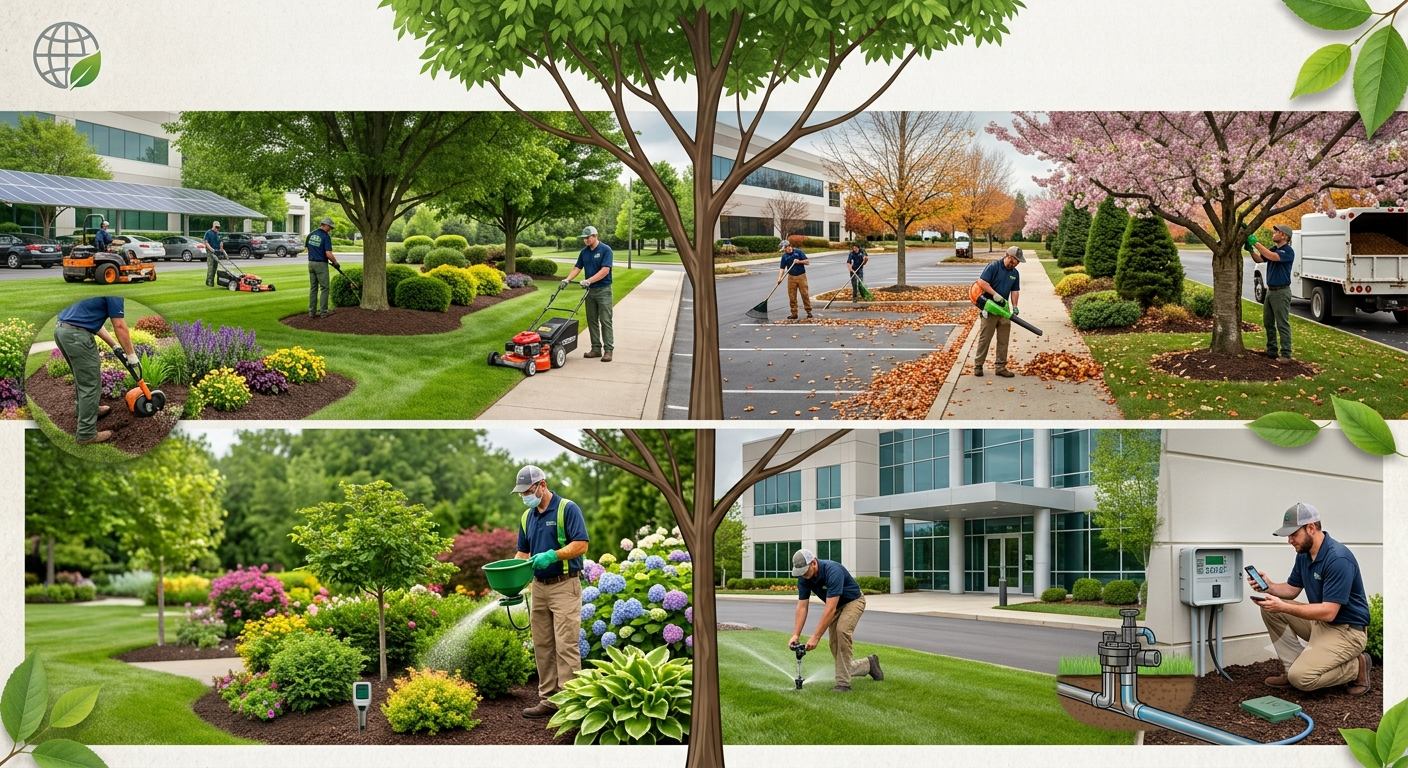
A proper plan is built around recurring, scheduled work, not a vague promise to “keep things tidy.” At minimum, it should specify each of these categories with a stated frequency:
Turf and lawn care
- Mowing, edging along paths, kerbs, and garden beds
- Fertilising and weed control programs, usually 2 to 4 treatments a year
- Aeration for high traffic turf areas, typically once or twice annually
Garden beds and planting
- Weeding on a set schedule, not just when it becomes visibly obvious
- Pruning and hedge trimming, frequency depends on species and how formal the look needs to be
- Mulch top ups, usually once or twice a year depending on garden bed exposure
Irrigation management
- Monthly system checks for leaks, blocked heads, or controller faults
- Seasonal start up in spring and shut down before winter, where relevant
- Adjustments during heat waves or dry stretches to prevent turf and plant stress
Tree management
- Scheduled inspections for structural issues, dead limbs, or disease
- Pruning for clearance over walkways, car parks, signage, and sightlines
- Pre storm season risk assessment, particularly important for larger or older trees
Hard surfaces and site presentation
- Blowing debris from paths, car parks, and entries after each visit
- Pressure washing of paving, entries, and courtyards on a quarterly basis
- Bin area and common area tidy ups where included in scope
How Often Should Each Task Actually Happen
Frequency is where most contracts get vague, and vague is where disputes start. Here is a realistic 2026 frequency guide for a Sydney climate, though your exact site may need adjustment based on turf type and plant palette:
| Task | Typical Frequency | Peak Season Adjustment |
| Mowing and edging | Weekly to fortnightly | Weekly through spring and summer growth, fortnightly to monthly in winter |
| Garden bed weeding and mulch top up | Monthly, mulch refresh 1 to 2 times a year | More frequent weeding after spring rain |
| Hedge and shrub pruning | Every 4 to 8 weeks depending on species | Heavier prune post flowering, lighter shaping through growing season |
| Irrigation checks | Monthly, plus start up and shut down | Weekly checks through summer heat stress periods |
| Tree inspection and pruning | Quarterly inspection, pruning as needed | Pre storm season inspection recommended |
| Fertilising and turf treatment | 2 to 4 times per year | Timed to spring green up and autumn hardening |
| Hard surface cleaning | Quarterly | More frequent in high foot traffic retail sites |
A technical point worth understanding: mowing frequency is not actually about the calendar, it is about growth rate. A weekly visit in October when turf is actively growing is doing real work. That same weekly visit in July is often unnecessary and is really just a way for a provider to justify a flat monthly fee. A properly scoped plan adjusts frequency by season rather than locking in the same number of visits year round.
Is the Cheaper Quote Actually a Worse Deal? How to Read a Maintenance Proposal
Two proposals with the same headline price per month can deliver very different amounts of actual work. Before comparing price, check these things first:
- Does the proposal list a specific number of visits per month, or just a vague “regular service”?
- Are irrigation checks and seasonal system start up and shut down included, or billed as an extra?
- Is mulch top up counted as included maintenance, or as a chargeable enhancement?
- Does the contractor carry public liability insurance and, where relevant, licensing for chemical applications like fertiliser and pest treatments?
- Is there a named point of contact and a reporting process, or do you only hear from them when something goes wrong?
The honest answer to “is the cheap one a bad deal” is that it depends entirely on what has been left out. A $1,200 a month contract with 12 visits and irrigation checks included is better value than a $900 a month contract with 8 visits and everything else billed separately, because the second one will almost always cost more once the season’s real workload shows up. The way to compare properly is cost per visit and cost per included task, not the flat monthly number on its own.
Case Study: Fixing a Poorly Scoped Contract
A strata committee managing a common area in Western Sydney came to us after their previous provider’s “fortnightly maintenance” had quietly become monthly by the second year, with hedges overgrowing walkway clearances and irrigation faults going unnoticed for weeks at a time. Their original contract had no stated visit count and no irrigation line item at all, so there was nothing to hold the provider accountable to.
We rebuilt the scope from the ground up, weekly mowing through the growing season stepping down to fortnightly in winter, monthly irrigation checks with seasonal start up and shut down included, and a quarterly tree inspection given the site’s mature street trees. The committee’s monthly spend increased slightly, but the number of actual scheduled visits nearly doubled, and for the first time they had a document they could point to when checking whether the work had actually happened. Within two months the walkway clearance issues were resolved and an irrigation fault was caught during a routine check rather than after turf had already died back.
How Ausco Landscaping & Construction Structures Commercial Maintenance Plans
Our commercial landscaping maintenance plans are built the way the section above describes, a specific visit count, named tasks, and frequency that adjusts with the season rather than a flat number that looks the same in July as it does in October.
- Every plan starts with a site walk through, not a desktop quote, so the schedule reflects your actual turf type, garden beds, and tree stock
- Irrigation checks and seasonal system management are included as standard, not billed as an add on
- For sites needing hardscape work alongside ongoing maintenance, our paving and driveways and landscape design teams can scope larger upgrades under the same relationship
- You get a named point of contact and a visit report after each scheduled service, so there is always a record of what was done and when
If you are reviewing a proposal from another provider, or your current contract has started slipping in scope the way the case study above describes, we are happy to review it and tell you honestly whether it is complete.
Frequently Asked Questions
How much does commercial landscape maintenance cost per month?
It depends heavily on site size, turf area, and visit frequency, but the more useful question is cost per included visit and task, since two contracts at the same monthly price can include very different amounts of actual work.
How often should commercial mowing happen?
Weekly to fortnightly during the spring and summer growing season, stepping down to fortnightly or monthly through winter. A plan that keeps the same frequency year round is usually either overservicing in winter or underservicing in summer.
What is usually not included in a standard maintenance contract?
Major tree removal, large scale garden redesigns, irrigation system installation, and significant hardscape repairs are typically quoted as separate projects rather than included in routine maintenance.
What should I ask a provider before signing a maintenance contract?
Ask for the exact number of visits per month, whether irrigation and seasonal system management are included, whether mulch top ups are included or billed separately, and proof of current public liability insurance.
Want a maintenance plan with a real visit schedule instead of a vague promise? Get in touch through our website for a free site walk through and an itemised proposal.