If you’ve started getting quotes for a new driveway, you’ve probably noticed the numbers are all over the place. One quote says $4,000, another says $14,000, for what sounds like a similar sized job. That’s not necessarily anyone trying to rip you off, driveway pricing genuinely varies a lot depending on material, your soil, access to the site, and whether council work is involved.
Below is a breakdown of what driveways actually cost across NSW in 2026, based on current material and labour pricing, plus the extra costs that catch a lot of homeowners out.
A standard residential driveway in NSW costs between $3,000 and $15,000 fully installed, depending mostly on material. Asphalt is the cheapest option at roughly $55 to $135 per square metre, plain concrete sits around $75 to $150 per square metre, and decorative options like exposed aggregate or pavers run $130 to $280 per square metre. On top of the driveway itself, most homes also need a council vehicle crossing permit, which typically adds $340 to $800 depending on your local council.
Driveway Costs by Material (2026)
| Material | Cost per m² | Notes |
|---|---|---|
| Asphalt | $55 to $135 | Cheapest upfront, needs resealing every 3 to 5 years |
| Plain concrete | $75 to $150 | Most common choice, low maintenance once cured |
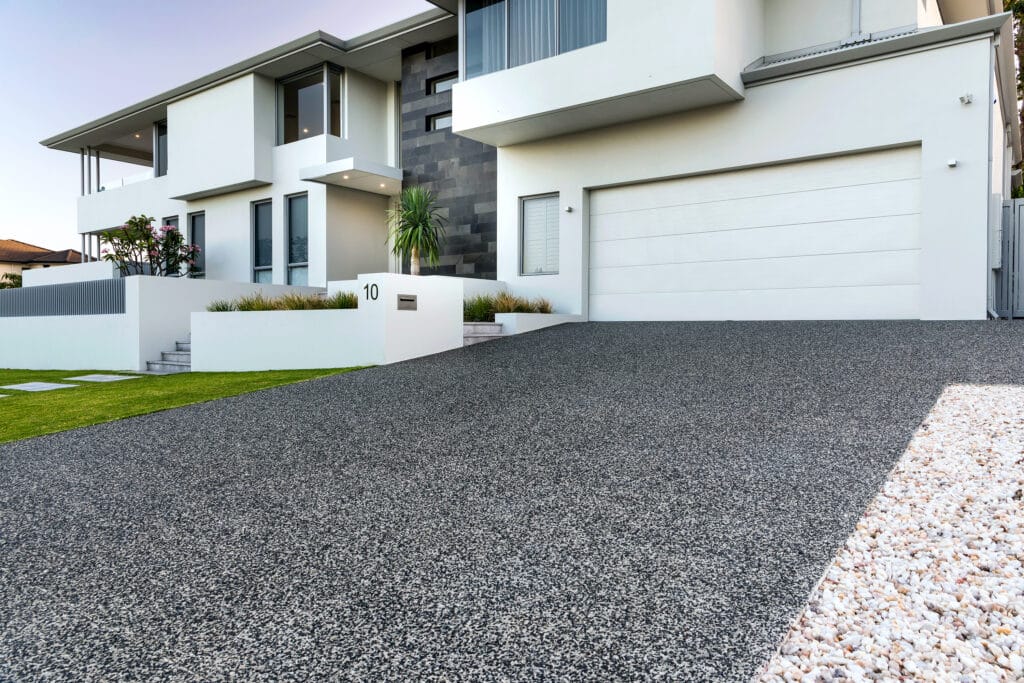
| Exposed aggregate concrete | $130 to $220 | Popular decorative option, better slip resistance |
| Concrete or brick pavers | $80 to $180 | Easy to repair small sections without redoing the whole slab |
| Natural stone (sandstone, bluestone) | $180 to $300+ | Premium end, adds real resale value |
| Gravel | $30 to $70 | Cheapest overall but needs periodic top ups |
For a typical 60 square metre Sydney driveway, that works out to roughly:
- Asphalt: $3,300 to $8,100
- Plain concrete: $4,500 to $9,000
- Exposed aggregate: $7,800 to $13,200
- Pavers: $4,800 to $10,800
These figures assume a straightforward, flat site with reasonable access. If your block is sloped, on clay, or the truck can’t get close, expect to land toward the higher end or above it.
Why Quotes Vary So Much
- Soil and site prep. A lot of Western Sydney sits on clay, which behaves badly under a driveway if it’s not excavated and based properly. Skipping proper road base is one of the main reasons cheap driveways crack or sink within a few years. Expect this step to eat a decent chunk of your budget, and honestly, its not the part to cut corners on.
- Slope. Concrete on a sloped or regraded site typically costs $10 to $40 more per square metre than a flat one, because of extra formwork and drainage requirements.
- Removing an old driveway. If you’re replacing an existing concrete or paved surface, demolition and disposal usually adds $20 to $65 per square metre on top of the new install.
- Drainage. Any driveway over about 5 square metres generally needs to manage water runoff so it doesn’t flow onto a neighbour’s property or the street. Drainage channels or connections to stormwater can add $500 to $2,000.
- 2026 market conditions. Material costs have risen roughly 8.5% over the past eighteen months, and there’s a reported labour shortage of around 15% in specialist concreting trades across Sydney. Practically, this means quotes from earlier in 2025 aren’t a reliable guide anymore, and its worth getting fresh quotes rather than going off an old number a mate mentioned.
Don’t Forget the Council Crossover
This is the part that surprises a lot of homeowners. The section of driveway that connects your property to the actual road, called the vehicle crossing or crossover, sits on council owned land and needs its own separate approval under Section 138 of the Roads Act, even if the rest of your driveway doesn’t need any permit at all.
Costs and processes vary by council. In the Blacktown local government area, which covers Schofields, Marsden Park and much of Western Sydney, this goes through a residential vehicle crossing application, with its own fees, formwork inspection, and a final inspection once the work is done. Other councils like Shellharbour charge a flat fee around $600 including inspections, while smaller applications elsewhere can run from around $340. The safest move is to check your specific council’s current fees and charges before you budget, because this line item alone can be a genuine surprise if a quote didn’t mention it upfront.
Which Material Actually Makes Sense?
There’s no single “best” answer here, it really depends on what you’re after.
- If budget is the main driver and you don’t mind resealing every few years, asphalt is hard to beat.
- If you want something that looks tidy with minimal ongoing fuss, plain concrete is the safe, common choice.
- If you want a driveway that genuinely lifts your street appeal and hides tyre marks well, exposed aggregate earns its higher price.
- If part of the driveway might need repair down the track (tree roots are common in older Sydney suburbs), pavers are easier to lift and replace in sections without redoing the whole thing.
How Ausco Landscaping Can Help
We get asked “how much for a driveway” a lot, and honestly the answer is always “it depends on your block”, which isn’t a very satisfying answer over the phone. That’s why we prefer to actually look at the site, check the soil, the fall, whether there’s an old surface to remove, before giving you a number we can stand behind.
Our Paving and Driveway Solutions team handles everything from a simple concrete slab through to decorative paving and exposed aggregate finishes, and we manage the council crossover process as part of the job so you’re not left chasing paperwork on your own. If your site needs clearing or an old driveway removed first, our Site Preparation and Rubbish Removal service covers that too, so its one team rather than juggling multiple trades.
Based in Schofields and servicing Marsden Park, Rouse Hill, Kellyville and across Western Sydney and the Hills District, we deal with Blacktown council’s crossover requirements regularly, so we know the process rather than having to look it up each time. Get in touch for a free quote and we’ll give you a real number, not a guess based on square metres alone.
Frequently Asked Questions
How much does a standard driveway cost in NSW?
Most homeowners spend between $3,000 and $15,000 depending on material and size, with a typical 60 square metre driveway landing somewhere between $4,500 and $13,000 fully installed.
Is asphalt or concrete cheaper for a driveway?
Asphalt is generally 20 to 30 percent cheaper upfront than concrete. Concrete tends to last longer with less regular maintenance, so the total cost gap narrows over a 15 to 20 year period.
Do I need council approval for a new driveway in NSW?
The driveway on your own property usually doesn’t need approval, but the section connecting to the road, the crossover, almost always requires a separate council permit under Section 138 of the Roads Act, regardless of what material you use.
How much does a council driveway crossing cost in NSW?
This varies by council. Fees commonly range from around $340 up to $800 or more depending on the local government area, and its separate from the cost of the driveway itself.
How long does a concrete driveway last compared to asphalt?
A well built concrete driveway can last 25 to 30 years, while asphalt typically lasts 15 to 20 years with resealing every 3 to 5 years. Concrete costs more upfront but needs less regular upkeep.
Can I pour a new driveway over an old one?
Not recommended in most cases. Pouring concrete over old asphalt causes problems because the two materials expand and contract differently, and pouring over a cracked or uneven old surface usually leads to the new one failing early too. Removing the old surface first is almost always worth the extra cost.