Most “small backyard landscaping” articles online are the same five tips reworded, vertical gardens, multi-purpose furniture, light coloured paving. They’re not wrong exactly, but they were written for a generic yard that could be anywhere in the world. Sydney backyards have their own specific problems, clay soil that turns to a swamp in winter and cracks like concrete in summer, council water rules, bushfire zones on the fringes of the Hills District, and blocks that keep getting smaller as new estates get built closer together.
We went through a lot of what’s out there right now, industry trend reports for 2026, landscaper blogs, and general home renovation discussion, to see what’s actually changing this year versus what’s just recycled advice. Here’s what’s genuinely worth knowing if your backyard is on the smaller side.
The Real Shift for 2026: Nooks, Not Showcases
For a few years the trend was “outdoor rooms”, basically an extension of the living room outside. In 2026 that’s evolved a bit further into what a lot of landscape designers are now calling garden nooks or garden rooms, small, intimate pockets rather than one big open entertaining zone.
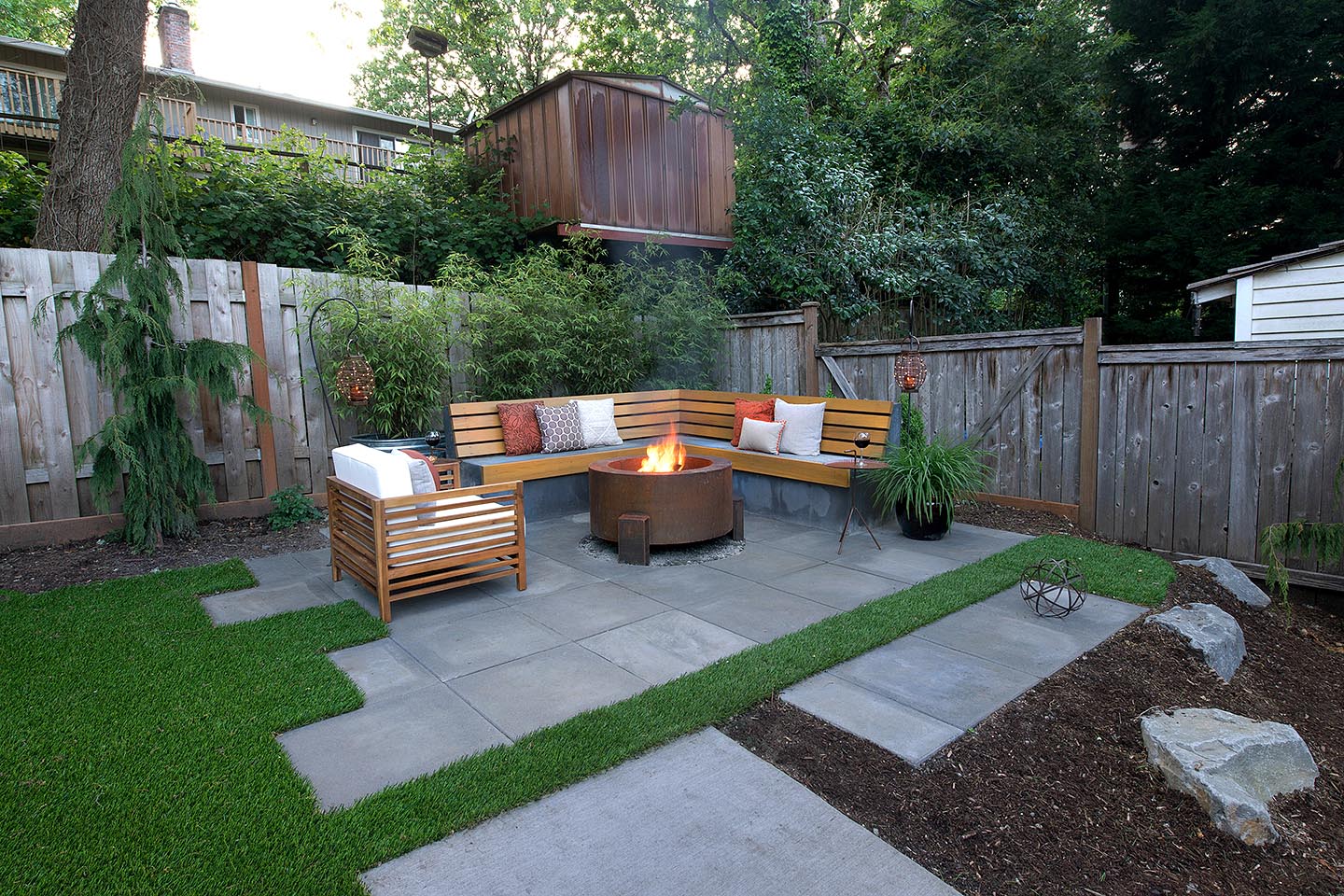
For a small Sydney backyard this is actually good news, because it means the trend has finally caught up to what small yards were always forced to do anyway. Instead of trying to fit a full outdoor lounge, dining set, and fire pit into 30 square metres, the idea now is one really well done cosy corner, a single comfy chair, a small side table, maybe a fire bowl, tucked next to a garden bed rather than sitting in the middle of an open space.
Water Sensitive Design Is No Longer Optional
This one doesn’t get talked about enough in the generic backyard blog posts, but it matters a lot in Sydney specifically. Councils across NSW are increasingly expecting water sensitive urban design (WSUD) principles even on small residential landscaping jobs, not just big developments.
Practically, this means:
- Permeable paving instead of solid concrete where you can, so water soaks in rather than running straight to the stormwater drain
- Small rainwater tanks (slimline ones fit against a fence easily) plumbed to garden taps
- Garden beds positioned to catch runoff from paved areas rather than letting it pool near the house
For Western Sydney blocks sitting on clay, this isn’t just a nice-to-have. Clay soil drains slowly, so managing where water actually goes after rain is often more important than what plants you pick.
Dry Creek Beds, an Old Trick Getting Rediscovered
If your backyard has a spot that turns into a puddle every time it rains (extremely common on clay soil in Schofields, Marsden Park and surrounding suburbs), a dry creek bed is worth looking at. It’s essentially a shallow channel lined with rocks and gravel that directs water away during storms and just looks like an intentional design feature the rest of the time.
It’s not a new idea, but its coming back into favour in 2026 because it solves a real drainage problem without needing to be an eyesore, unlike a plain drainage pipe or a boring agricultural drain running across the yard.
Living Hedges Over Timber Fencing
Timber paling fences are everywhere in Sydney, but they warp, they weather badly, and they’re not cheap to replace every decade or so. A growing number of landscapers are now recommending a living hedge, like lilly pilly or clumping bamboo, either instead of a fence or planted in front of an existing one.
For small backyards this does two jobs at once, it gives you privacy and it softens what’s usually the least attractive part of a small yard, the boundary. Lilly pilly in particular copes well with Sydney’s climate and grows fast enough that you’re not waiting five years for privacy.
Where Artificial Turf Actually Fits (And Where It Doesn’t)
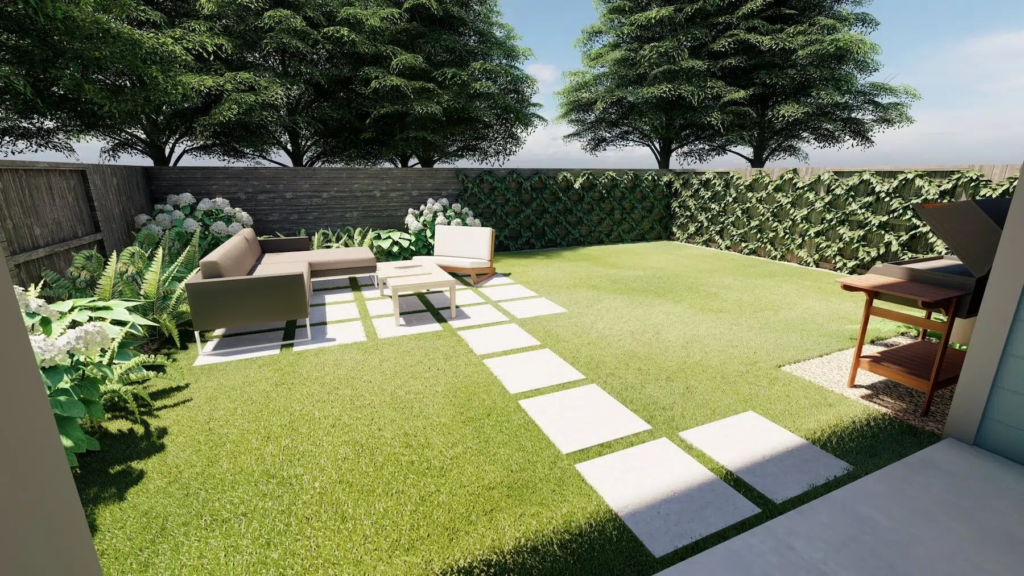
A few years ago artificial turf was recommended for basically every small yard. The trend has shifted a bit in 2026, more landscapers are being upfront that turf gets genuinely hot underfoot in direct summer sun, and the seams where it meets pavers can lift over time.
Where it still makes real sense is shaded courtyards where real grass struggles to grow at all, pet areas, or small strips that get too much foot traffic for lawn to survive. If your small backyard gets full afternoon sun though, its worth at least considering a groundcover or a paved zone with pockets of planting instead.
Bushfire-Aware Planting for the Outer Suburbs
If you’re further out toward the edges of the Hills District or near bushland, bushfire attack level (BAL) requirements can actually shape what you’re allowed to plant close to the house. Low-oil native species like bottlebrush or lemon myrtle are safer choices than some ornamental shrubs, and non-flammable mulch like gravel near the house is a small change that makes a real difference. This is easy to overlook in a small yard where every plant is close to the building anyway.
The “Sunday Garden” Idea
One trend that’s genuinely useful rather than just a buzzword, the idea of a garden that looks after itself most days so you’re not out there every weekend. For small yards this basically means leaning on evergreen native structure plants, mulched beds instead of lawn where possible, and a simple irrigation timer rather than hand watering. Its a small mindset shift but it changes what you actually plant from day one.
How Ausco Landscaping Can Help With Your Small Sydney Backyard
We’re not going to pretend every trend above suits every yard, that’s actually the point. A dry creek bed makes sense if you’ve got a genuine drainage problem, not just because its trending. A living hedge takes a season or two to establish, so if you need privacy immediately, a fence with climbing plants might suit better in the short term.
What we do at Ausco Landscaping is walk your actual block first, checking the soil, the drainage, which way it faces, whether you’re in a bushfire zone, before recommending anything. We’re a family-owned team servicing Schofields, Marsden Park, Rouse Hill, Kellyville and across Western Sydney and the Hills District, so we’re dealing with these exact clay soil and drainage issues on a weekly basis, not guessing from a general checklist.
If any of the above sounds like it fits your yard, our Landscape Design & Construction service covers everything from the initial layout through to the build. If drainage is the main headache, that often starts with our Site Preparation and Rubbish Removal work to get the block sorted first. And for hedges, retaining walls or paving to go with your new layout, our Hardscaping & Structural Works and Paving and Driveway Solutions teams handle that. Once it’s all in, our Garden Maintenance service keeps it looking good without you needing a “Sunday garden” habit you don’t have time for.
If you’d like us to look at your yard specifically rather than going off a general trend list, get in touch for a free quote.
Frequently Asked Questions
What is a garden nook in landscaping?
A garden nook is a small, intentionally cosy corner of a yard, usually just one seat or a small bench with planting around it, rather than one big open entertaining area. Its a 2026 trend that actually suits small backyards well since it doesn’t need much space to work.
Is artificial turf still a good idea for small backyards in Sydney in 2026?
It depends on the spot. It works well in shaded courtyards or pet areas where real grass struggles, but in full sun it can get uncomfortably hot underfoot, so a lot of landscapers now recommend it only for specific zones rather than a whole yard.
What is water sensitive urban design and does it apply to a small backyard?
Water sensitive urban design (WSUD) is an approach to managing rainwater onsite instead of sending it all to stormwater drains, using things like permeable paving and rainwater tanks. It increasingly applies to smaller residential landscaping projects too, especially on clay soil blocks common across Western Sydney.
How do I fix a backyard that turns into a swamp after rain?
This is usually a drainage issue rather than a plant issue, common on Western Sydney’s clay soil. A dry creek bed, correctly graded garden beds, or proper site drainage work often solves it. Its worth getting the site assessed before landscaping over the top of the problem.
Do I need council approval for hedges or fences in a small backyard in Sydney?
Fences generally don’t need approval if they’re under standard height limits, and hedges usually don’t either, but height restrictions and boundary rules can vary by council. Its worth a quick check with your local council, or ask your landscaper, before starting anything structural.